
Friday, 19 January 2018

Friday, 12 January 2018
pi
Pi (π)

Draw a circle with a diameter (all the way across the circle) of 1
Then the circumference (all the way around the circle) is 3.14159265... a number known as Pi
Pi is often written using the greek symbol π

The definition of π is:
The Circumference
divided by the Diameter
of a Circle.
divided by the Diameter
of a Circle.

To help you remember what π is ... just draw this diagram.
Finding Pi Yourself
Draw a circle, or use something circular like a plate.
Measure around the edge (the circumference):
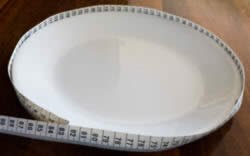
I got 82 cm
Measure across the circle (the diameter):
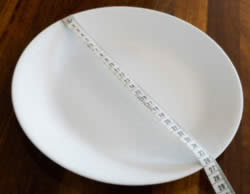
I got 26 cm
Divide:
82 cm / 26 cm = 3.1538...
That is pretty close to π. Maybe if I measured more accurately?
Using Pi
We can use π to find a Circumference when we know the Diameter
Circumference = π × Diameter
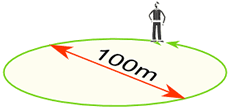
Also we can use π to find a Diameter when we know the Circumference
Diameter = Circumference / π
Friday, 5 January 2018
creative method to teach mathematics
- Use dramatizations . Invite children pretend to be in a ball (sphere) or box (rectangular prism), feeling the faces, edges, and corners and to dramatize simple arithmetic problems such as: Three frogs jumped in the pond, then one more, how many are there in all?
- Use children's bodies. Suggest that children show how many feet, mouths, and so on they have. When asked to show their "three arms," they respond loudly in protest, and then tell the adult how many they do have and show ("prove") it. Then invite children to show numbers with fingers, starting with the familiar, "How old are you?" to showing numbers you say, to showing numbers in different ways (for example, five as three on one hand and two on the other).
- Use children's play. Engage children in block play that allows them to do mathematics in numerous ways, including sorting, seriating, creating symmetric designs and buildings, making patterns, and so forth. Then introduce a game of Dinosaur Shop. Suggest that children pretend to buy and sell toy dinosaurs or other small objects, learning counting, arithmetic, and money concepts.
- Use children's toys. Encourage children to use "scenes" and toys to act out situations such as three cars on the road, or, later in the year, two monkeys in the trees and two on the ground.
- Use children's stories. Share books with children that address mathematics but are also good stories. Later, help children see mathematics in any book. InBlueberries for Sal, by Robert McCloskey (Penguin, 1993), children can copy "kuplink, kuplank, kuplunk!" and later tell you the number as you slowly drop up to four counters into a coffee can.
- Use children's natural creativity. Children's ideas about mathematics should be discussed with all children. Here's a "mathematical conversation" between two boys, each 6 years of age: "Think of the biggest number you can. Now add five. Then, imagine if you had that many cupcakes." " Wow, that's five more than the biggest number you could come up with!"
- Use children's problem-solving abilities. Ask children to describe how they would figure out problems such as getting just enough scissors for their table or how many snacks they would need if a guest were joining the group. Encourage them to use their own fingers or manipulatives or whatever else might be handy for problem solving.
- Use a variety of strategies. Bring mathematics everywhere you go in your classroom, from counting children at morning meeting to setting the table, to asking children to clean up a given number or shape of items. Also, use a research-based curriculum to incorporate a sequenced series of learning activities into your program.
- Use technology. Try digital cameras to record children's mathematical work, in their play and in planned activities, and then use the photographs to aid discussions and reflections with children, curriculum planning, and communication with parents. Use computers wisely to mathematize situations and provide individualized instruction.
- Use assessments to measure children's mathematics learning. Use observations, discussions with children, and small-group activities to learn about children's mathematical thinking and to make informed decisions about what each child might be able to learn from future experiences. Also try computer assessments. Use programs that assess children automatically.
Friday, 29 December 2017
MATHS IN DAILY LIFE
Maths in daily lifeWhen you buy a car, follow a recipe, or decorate your home, you're using math principles. People have been using these same principles for thousands of years, across countries and continents. Whether you're sailing a boat off the coast of Japan or building a house in Peru, you're using math to get things done. How can math be so universal? First, human beings didn't invent math concepts; we discovered them. Also, the language of math is numbers, not English or German or Russian. If we are well versed in this language of numbers, it can help us make important decisions and perform everyday tasks. Math can help us to shop wisely, buy the right insurance, remodel a home within a budget, understand population growth, or even bet on the horse with the best chance of winning the race. Join us as we explore how math can help us in our daily lives. In this exhibit, you'll look at the language of numbers through common situations, such as playing games or cooking. Put your decision-making skills to the test by deciding whether buying or leasing a new car is right for you, and predict how much money you can save for your retirement by using an interest calculator. Ready to get started? Find out about beating the odds in "Playing to Win." |
Friday, 22 December 2017
PUZZLE
Quadra's Square Puzzle
Quadra's Square Puzzle is a puzzle which involves placing digits in the correct places so that each row and column adds up to the same number.
It is a good activity to use for practicing adding, using negative numbers, and also to develop perseverance and reasoning.


Friday, 15 December 2017
PUZZLE IN PI
As Easy As Pi Puzzle
Cut up the Greek letter Pi below into five pieces as shown. Then re-arrange the five pieces to make a square. Is there more than one way?

I have only found one solution excluding reflections and rotations:

Cut up the Greek letter Pi below into five pieces as shown. Then re-arrange the five pieces to make a square. Is there more than one way?
I have only found one solution excluding reflections and rotations:
Friday, 8 December 2017

Subscribe to:
Posts (Atom)